
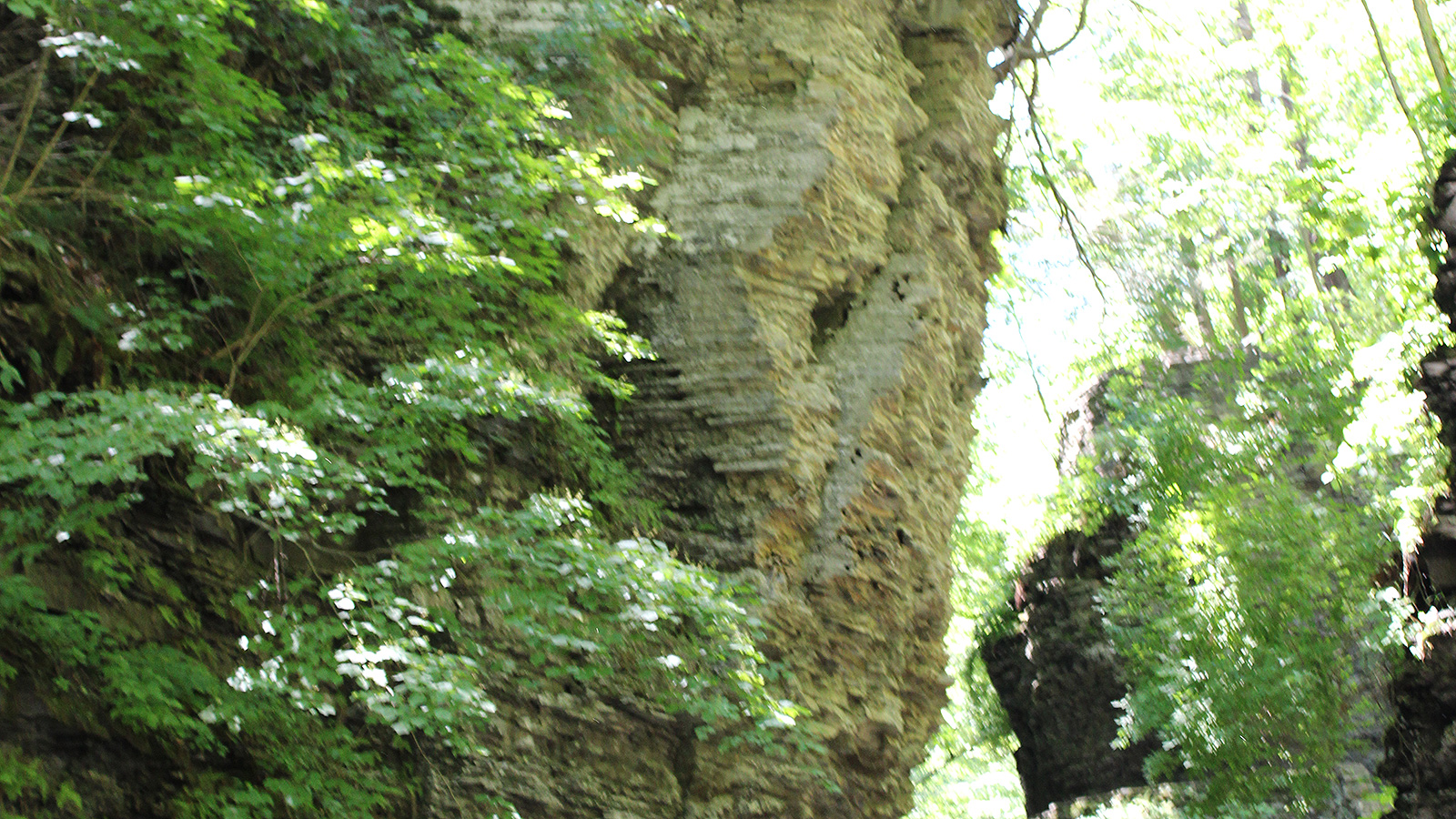
Watkins Glen State Park’s Gorge Trail follows Glen Creek through a concentrated mile of stone passages and 19 waterfalls in the Finger Lakes village of Watkins Glen. It is visually rich and physically specific: expect stairs, wet stone, narrow spaces, crowds, and seasonal access rather than an easy paved waterfall stroll. New York State Parks opened the Gorge Trail for the 2026 season on May 9 and restored full access through Sentry Bridge on July 1. The trail typically closes in mid-October, with no gorge or waterfall access during the winter closure.
Watkins Glen Gorge Trail quick facts
- Operator
- New York State Parks, Recreation and Historic Preservation
- Waterfalls
- 19 along a roughly one-mile gorge section
- 2026 opening
- May 9; seasonal closing is typically in mid-October
- 2026 access update
- Sentry Bridge reopened July 1, restoring full Gorge and South Rim access
- Winter
- Rim trails remain available, but there is no gorge or waterfall access
- Primary limitation
- Stone stairs, wet surfaces, congestion, and seasonal closure
What route should a first-time visitor choose?
The Gorge Trail is the central experience because it stays close to Glen Creek and passes beneath, beside, and above multiple cascades. The rim routes provide return options and a different view of the landscape. Use the official Watkins Glen trail map to decide whether the group will climb through the gorge and return on a rim, reverse direction, or use a seasonal shuttle when operating. A map screenshot should include entrances, not only a highlighted line.
The right route depends on knees, balance, heat, crowding, and where the car is parked. Stone steps accumulate into real effort even when the mileage looks short. Give the group more time than a one-mile label suggests, keep hands free on stairs, and turn around before fatigue makes every wet landing a problem.
What changed for the 2026 season?
The official park page lists the May 9 seasonal opening. New York State Parks then announced that the new Sentry Bridge opened July 1, 2026, restoring full Gorge and South Rim trail access before the Independence Day weekend. Conditions can still change, so check the park page on the day of travel. The park is generally open dawn to dusk, while campgrounds, the pool, and shuttle follow their own schedules.
How do you manage wet terrain and crowds?
Wear shoes with dependable traction and expect spray even when the forecast is dry. Stay behind rails and on the built trail; the gorge’s visual drama comes from steep rock and moving water, the same ingredients that make shortcuts dangerous. Pause in wider areas rather than stopping a line of hikers on stairs. If the gorge is uncomfortably crowded, use a rim trail or return at a quieter time instead of competing for a narrow viewpoint.
Heavy rain can change both flow and footing. Check park notices and local weather together. A waterfall may look more energetic after a storm while the sensible visit becomes shorter. In winter, do not treat a closed gate as a challenge: the park explicitly says the gorge and waterfall are inaccessible, even though rim trails remain open.
What photography kit earns its place?
A phone or compact camera covers most compositions. A wide lens handles tight stone passages; a short telephoto isolates falling water and the figures that provide scale. Overcast light helps retain detail between bright water and dark shale. If using a tripod, work only where it does not narrow the path, and favor short, controlled sessions over elaborate setups in moving traffic.
For another major New York waterfall park with a broader driving-and-overlook experience, use the Letchworth State Park guide. The Ithaca waterfalls photo guide offers a city-and-gorge alternative farther east.